Office Clearance Hillingdon Health and Safety Policy
 Purpose: This policy sets out the principles, responsibilities and practical controls that govern safe office clearance and waste removal operations for our commercial premises. It applies to all staff, contractors and visitors involved in office clearance work, including office clearance, rubbish removal services and related waste handling. The aim is to protect health, prevent injury and ensure compliance with applicable health and safety obligations while delivering efficient rubbish collection and commercial clearance services in the service area.
Scope: The policy covers routine and non-routine activities encountered during workplace clearouts, including removal of furniture, IT equipment, paper archives, hazardous items such as batteries or fluorescent tubes, and general rubbish clearance. It defines how risk assessments, safe systems of work, personal protective equipment and segregation of materials are managed to reduce exposure to hazards, minimise environmental impact and support responsible waste disposal.
 Policy Statement: We commit to a proactive approach to health and safety, ensuring everyone involved in office clearances and rubbish collection understands their duties. All operations will be planned, risk-assessed and executed under competent supervision. We will maintain clear lines of responsibility, provide appropriate training, and ensure that equipment and vehicles used for rubbish clearance and waste removal are safe, maintained and used by trained personnel.
Responsibilities and Roles
Management retains overall accountability for health and safety policy implementation. Site supervisors are responsible for conducting and documenting risk assessments before any clearance task begins. Operatives must follow safe systems of work, wear the required PPE and report hazards or incidents immediately. Contractors engaged for commercial waste clearance must demonstrate suitable competency and arrangements for health and safety before undertaking work.
Risk Assessment and Control Measures
All office removal tasks will be preceded by a documented risk assessment identifying manual handling risks, sharp objects, asbestos suspicion, electrical hazards and potential exposure to dust or biohazards. Controls will include mechanical aids, team lifting, specified carrying routes, propping and securing loads, segregation of recyclable and hazardous materials, and use of lockable containers. Emergency procedures and spill containment kits will be available on-site when needed.Personal Protective Equipment (PPE): Appropriate PPE for rubbish and office clearance work includes safety gloves, high-visibility clothing, safety boots, eye protection and dust masks where dust is present. PPE will be provided, maintained and its use enforced. Operatives will be trained in correct selection, fitting and disposal of PPE, and supervisors will monitor compliance regularly.
Safe handling and manual handling controls form a central part of our safety approach. Tasks must be planned to avoid unnecessary lifting, and mechanical aids such as trolleys, sack trucks and lifting straps should be used for bulky items. Work teams will be briefed on correct lifting techniques, breaks will be scheduled to reduce fatigue, and specialist contractors will be used for heavy or complex removals.
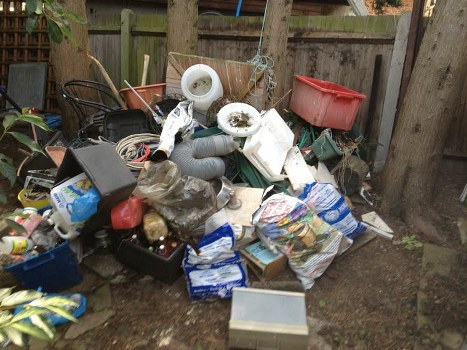 Transport and vehicle safety are critical when moving cleared items to disposal or recycling points. Vehicles must be loaded safely to prevent shifting, drivers must be trained in load restraint, and pre-use vehicle checks are mandatory. Vehicles used for rubbish removal will be subject to regular maintenance and inspection schedules. Waste carriers engaged must hold appropriate licences or permits where required.
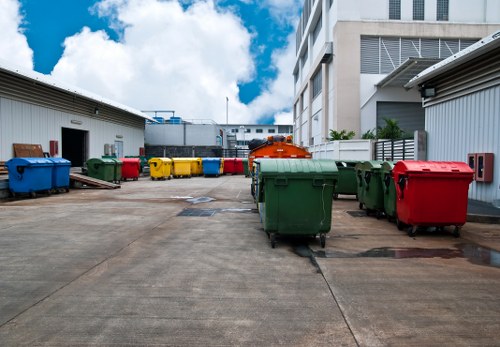 Waste Segregation and Environmental Considerations: We will prioritise reuse and recycling where possible. Office clearances will include sorting of paper, cardboard, electronics, metals and general waste into designated streams. Hazardous materials will be segregated and disposed of through licensed hazardous waste routes. Records of waste movements and disposal will be maintained to demonstrate responsible environmental stewardship.
Training and Competency: All personnel involved in office clearances must receive induction training covering hazard recognition, manual handling, use of equipment and emergency procedures. Ongoing competency assessments and toolbox talks will refresh safe working practices for rubbish clearance activities. Contractors must provide evidence of training and insurance before commencing work.
Incident Reporting and Investigation: Any incident, near miss or injury during a clearance operation must be reported immediately and investigated to identify root causes. Corrective actions will be implemented to prevent recurrence. Records of incidents and remedial measures will be reviewed periodically to drive continuous improvement in safety performance within the rubbish collection and clearance service area.
Monitoring and Review: This policy will be reviewed at regular intervals and following any significant change in operations, equipment or legislation. Routine audits, inspections and performance metrics will be used to monitor compliance and effectiveness. Management will ensure resources are available to maintain high standards of health and safety for office and commercial waste clearance activities, fostering a culture where safety and environmental responsibility are integral to service delivery.
